Residential · Wall Township, NJ · · By Nick Sheridan
Found binder clips holding a dryer vent together in Wall Township, NJ. We were at the house to clean the vent, and when we pulled the dryer out, there they were. School supplies, holding together a duct that carries hot, lint-filled air out of the house.
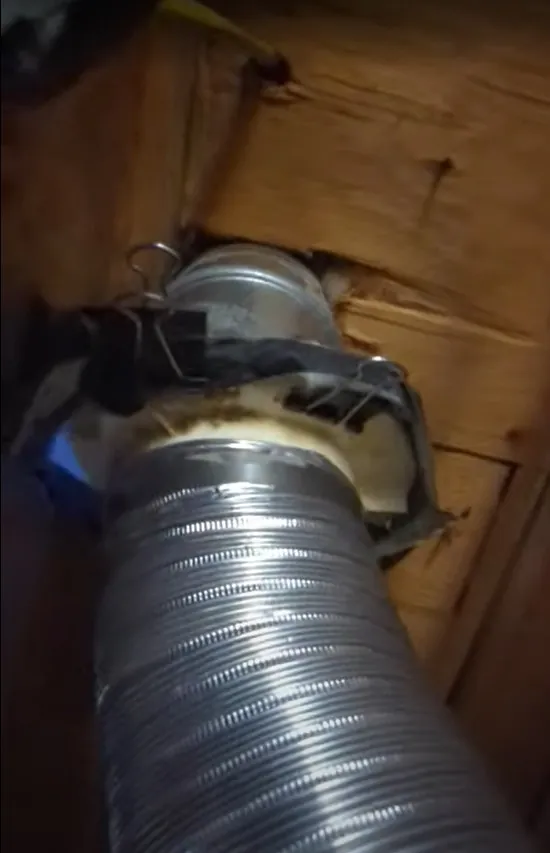
Whoever installed this created a fire hazard and walked away. This is what cutting corners looks like, and this is exactly why the cheapest quote isn't always the best one.
Why a loose dryer vent is a fire risk
Every load, a dryer pushes hot air through that duct, and the air carries lint with it, dry fabric fiber that burns easily.
Done right, the joint keeps the air and the lint moving to the outside. Clips leave gaps. Lint catches on the edges of the gap and piles up in the space behind the dryer, where nobody looks, and then hot air blows across that pile every time the dryer runs. That's how you set up a fire.
Air that leaks out at the joint never reaches the outside, so the duct can't clear itself and lint packs the run. With a clogged vent, the dryer works longer to dry the same load. That costs you on the electric bill. It wears out the dryer, too. Then there's the warm, damp air leaking into the wall cavity or the laundry room, which brings mold with it.
How we fixed it
Removed the school supplies and replaced them with the appropriately sized elbow and heat-rated tape. That's the whole fix, and it's how the joint should've been done the first time.
Without the elbow, the duct gets forced around the corner, and a forced duct kinks and traps lint. The tape is foil, rated for the heat a dryer puts out. Cloth duct tape dries out and lets go. Screws are a bad idea too, since the tips stick into the airflow and catch lint.
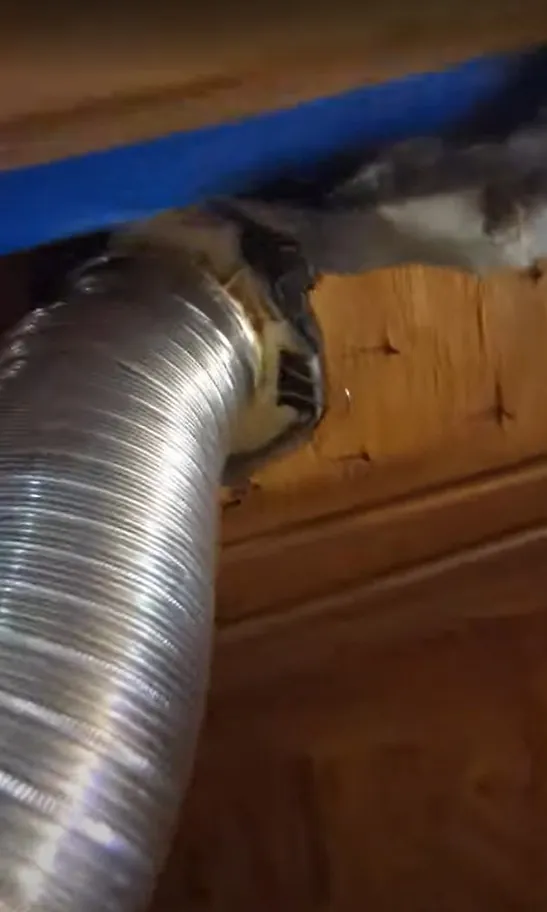
When you hire a professional, you're paying for it to be done right, the first time.
What to look for behind your dryer
You don't need tools for a first look. Pull the dryer out far enough to see the connection at the back.
- Look at the joint. It should be a metal elbow or a short run of rigid or semi-rigid metal duct, sealed with foil tape. No clips, no cloth tape.
- Look for lint on the floor or the wall behind the dryer. Lint outside the duct means the duct is leaking.
- Run the dryer and go outside. The vent flap should open, and you should feel steady air coming out. Weak air means a clog or a leak somewhere in the run.
- Notice how long loads take. Towels that need two cycles are a sign the vent isn't clearing.
- Feel the top of the dryer at the end of a load. If it's hot to the touch, the heat isn't getting out.
If anything on that list looks wrong, stop using the dryer until the vent has been checked.
How the Quarterly Maintenance Plan covers this
Dryer vent cleaning is a first-quarter item on our Quarterly Maintenance Plan. We come out four times a year with a seasonal checklist, and the dryer vent gets done on the January to March visit, which is also when we do the HVAC filter and the smoke and CO alarms. The bathroom exhaust vents and the refrigerator coils get done while we're there.
Every visit comes with time-stamped before and after photos and a written report, so you see the connection before we touch it and again once we've left. A joint like this one would've shown up in the photos the first time we pulled the dryer out.
Ask us about our Quarterly Maintenance Plan so your property gets maintained and documented by professionals who don't take shortcuts.
Before you take the cheapest quote
Good work isn't cheap, and cheap work isn't good. The low quote on a dryer vent job is low for a reason, so ask what parts they're using and ask to see a photo of the finished joint.
If you're in Wall Township or anywhere in Monmouth or Ocean County and you're not sure what's behind your dryer, call us at (732) 362-4425 or request a quote. We're licensed, bonded, and insured, NJHIC #13VH13963600.