Residential · Monmouth County, NJ · · By Nick Sheridan
Come November in Monmouth County, the dryer goes from a few loads a week to a load a day. Coats and blankets, towels, sheets for the holiday guests. That's the busiest stretch of the year for a dryer, and it's exactly when a clogged vent does the most harm.
Why lint in the vent is a fire risk
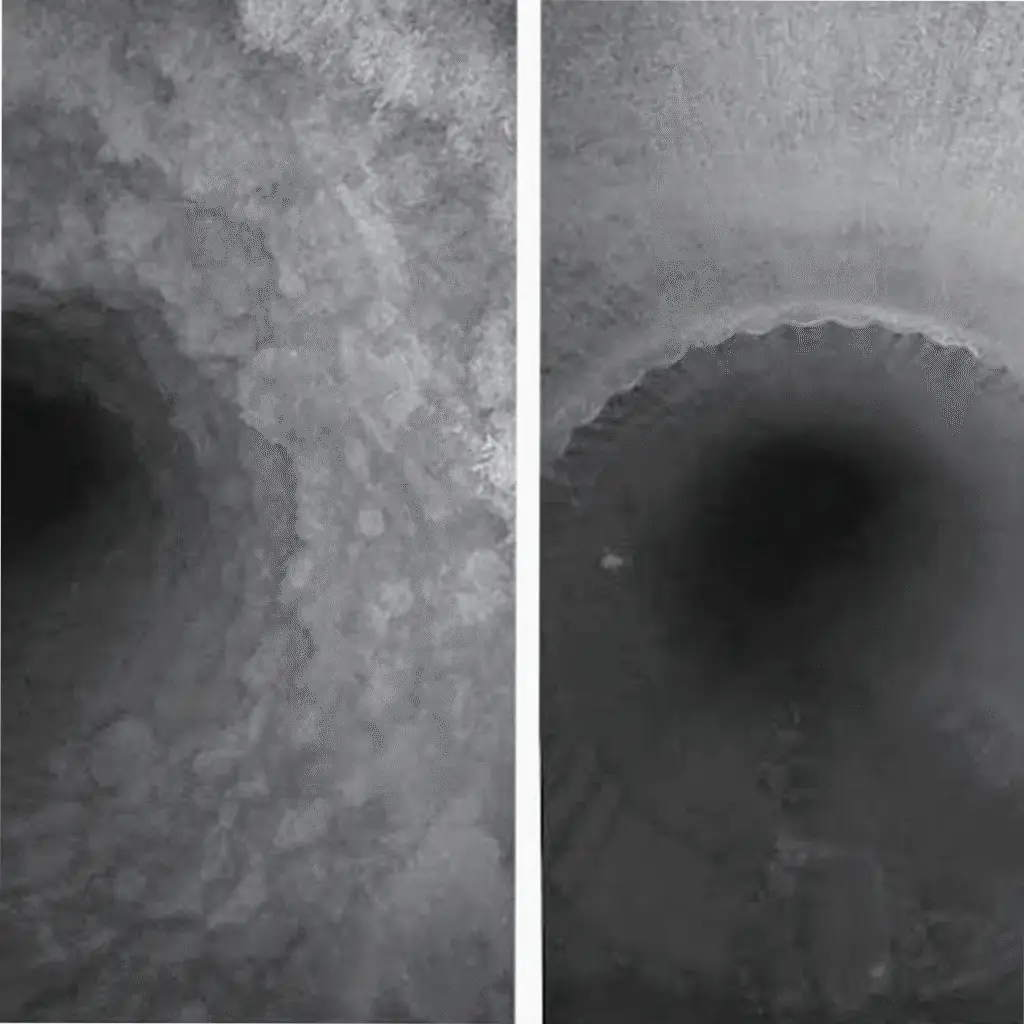
Every load pushes hot air through the vent and leaves a little more lint behind. It coats the walls of the duct and collects at every bend, and some of it ends up at the hood outside. That lint is dry fabric fiber, and it burns easily. If the vent goes straight through the wall, the run stays fairly clear. Give it a long run with two or three elbows and the lint builds up until the airflow slows down, which means the heat stays in the duct right there with the lint. That's how a dryer fire gets set up, behind the dryer where nobody's looking.
Earlier this year we found a vent in Wall Township held together with binder clips. That story is here, and it's why we look at the connection behind the dryer on every visit, as well as the duct.
The signs behind the dryer
- Towels need a second cycle to dry.
- The top of the dryer is hot to the touch at the end of a load.
- The laundry room is warm and damp while the dryer runs.
- There's lint on the floor or the wall behind the dryer.
- Go outside while it's running. The flap on the hood should open, and you should feel steady air. Weak air or a flap that stays shut means a clog or a leak.
- A burning smell, even a faint one. Stop using the dryer until the vent has been checked.
What we do
First, the dryer comes out, and the duct gets disconnected. We clean the whole run with brushes and a vacuum, from the back of the dryer to the hood on the outside wall. The lint trap is the easy part. Then we check the connection behind the dryer for a proper elbow and foil tape, and make sure the flap on the hood opens and closes freely, and once that's done, we run the dryer to see that the air's moving. You get time-stamped before and after photos with the report.
Why Monmouth County vents clog faster than you'd think
Bigger houses mean longer runs. A laundry room in the middle of the house in Wall Township or Howell can have a vent that travels 20 feet or more to the outside wall, with elbows at every turn. Closer to the water, salt air corrodes the hood flap so it sticks half open and lets the lint pile up behind it. A second home that sits empty during the week is a dryer nobody looks behind for months.
Where it sits on the Quarterly Maintenance Plan
On the Quarterly Maintenance Plan, dryer vent cleaning is on the first-quarter visit, January to March, and we put it there so it gets done every year without anyone having to remember it. That visit also covers the HVAC filter and the smoke and CO alarm batteries. Bathroom exhaust vents too. The range hood and microwave filters get done the same day, and so do the dishwasher filter and the refrigerator coils.
If you're not on the plan, book it on its own before the holidays. It's a short visit. This is the one piece of maintenance that can keep a fire from starting in your house.
When to call
Before the guests arrive and before the heaviest laundry weeks of the year, or sooner if any of the signs above sound familiar. Call us at (732) 362-4425 or request a quote. We're licensed, bonded, and insured, NJHIC #13VH13963600.