Residential · Toms River, NJ · · By Nick Sheridan
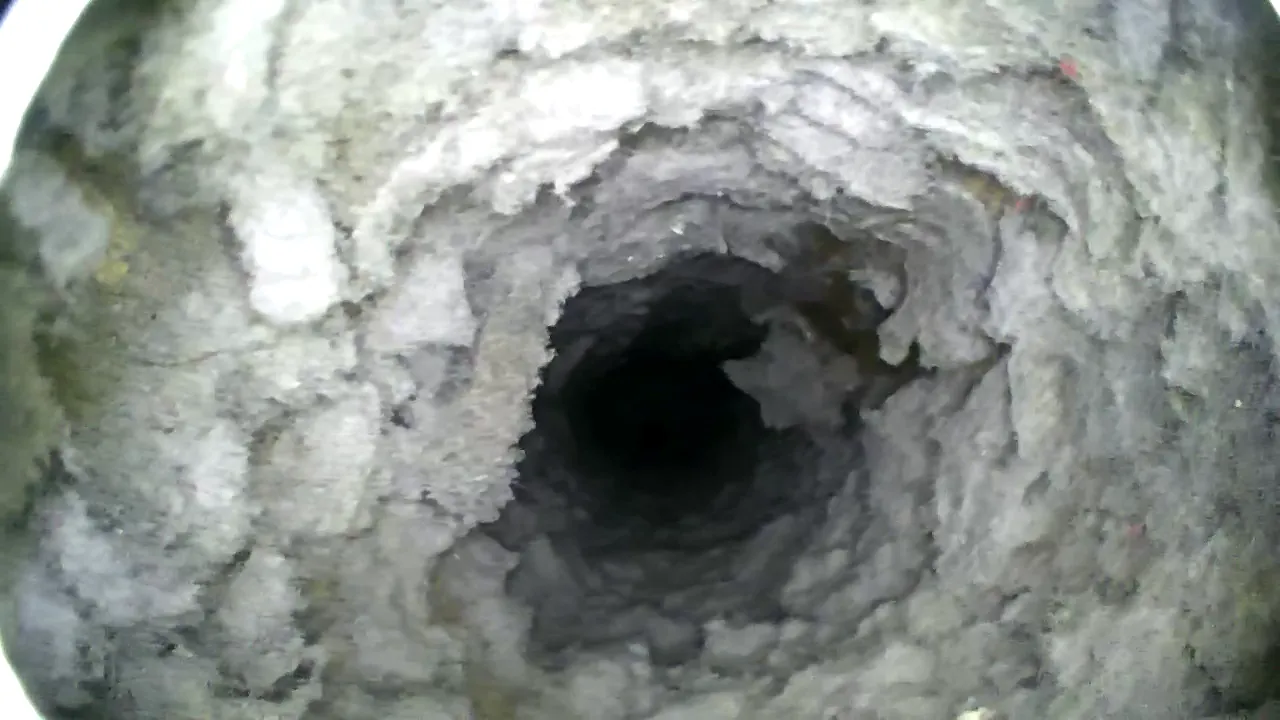
We put a small camera into the dryer duct at a two-story house in Toms River, NJ, and found lint coating the walls the whole way along. Not a patch near the dryer. The whole run. That vent sits high on an outside wall, where nobody looks at it, and the camera went in before we touched anything else.
What the camera showed
Lint doesn't pile up in one spot and stop. It sticks to the duct wall in a layer, every load adds to that layer, and the tube the air has to push through gets narrower each time. Here it was a coat of lint on every inch of duct the camera could reach, from the dryer end to the wall.
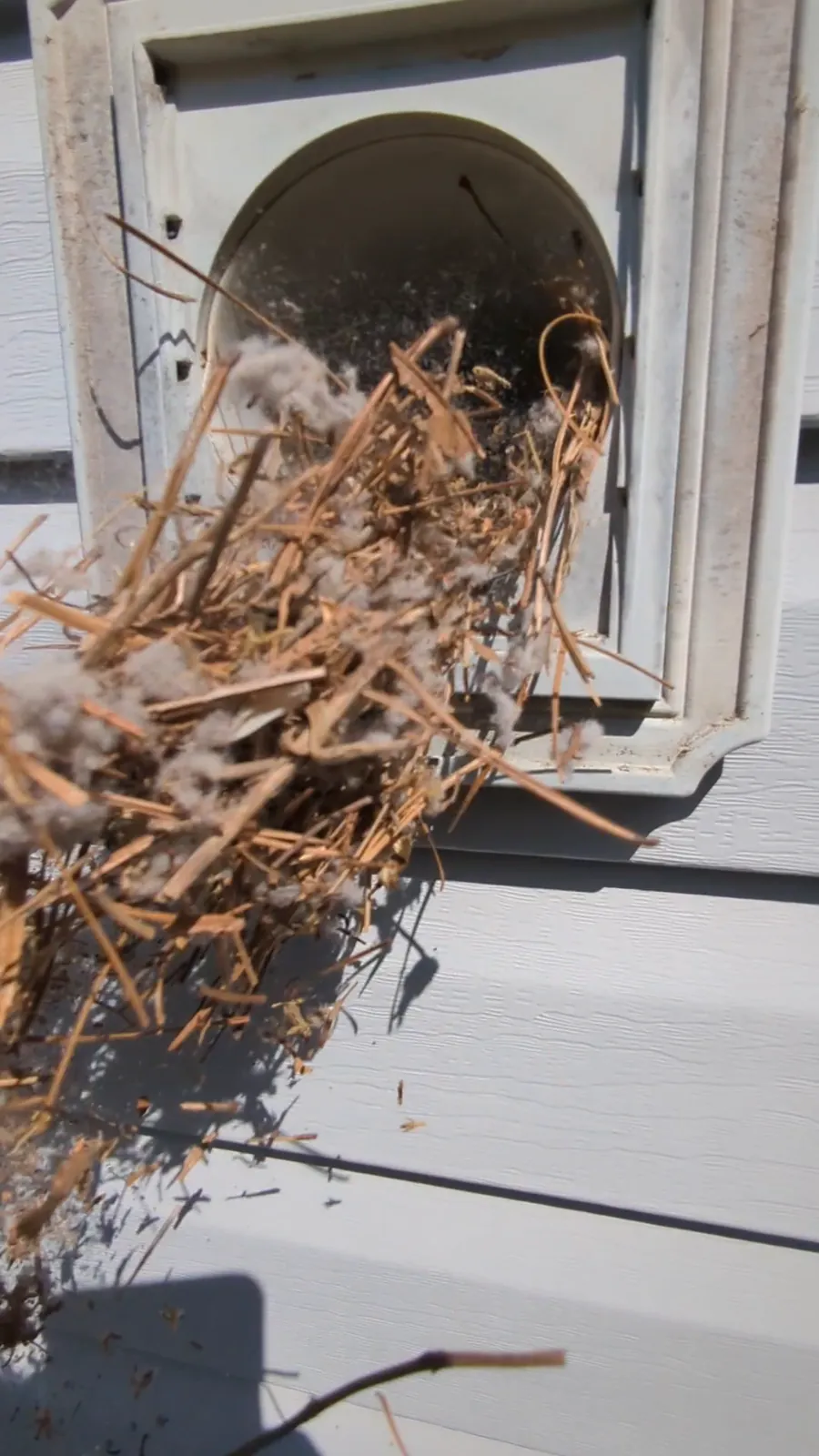
Outside, the vent hood on the wall was packed solid with lint, dry grass, and twigs, way past a little buildup around the edge. It came out by the handful. Air from the dryer had nowhere to go.
Why a blocked vent is a fire problem and a money problem
Lint is dry fabric fiber, and it burns easily, which is the whole reason any of this matters.
A blocked vent makes the dryer run longer and hotter to dry the same load. Every cycle, you're paying for the longer run time in electricity. All that extra heat wears the dryer out faster, too, and it's sitting in a duct lined with the stuff that catches first.
The U.S. Fire Administration counted about 2,900 home dryer fires a year in the US from 2008 to 2010, and the leading cause was failure to clean the dryer. Which is exactly what we were looking at in Toms River.
There's a second cost that doesn't show up on the electric bill. Warm, damp air that can't get out of the duct ends up in the wall or the laundry room, and it brings mold with it.
What came out of it
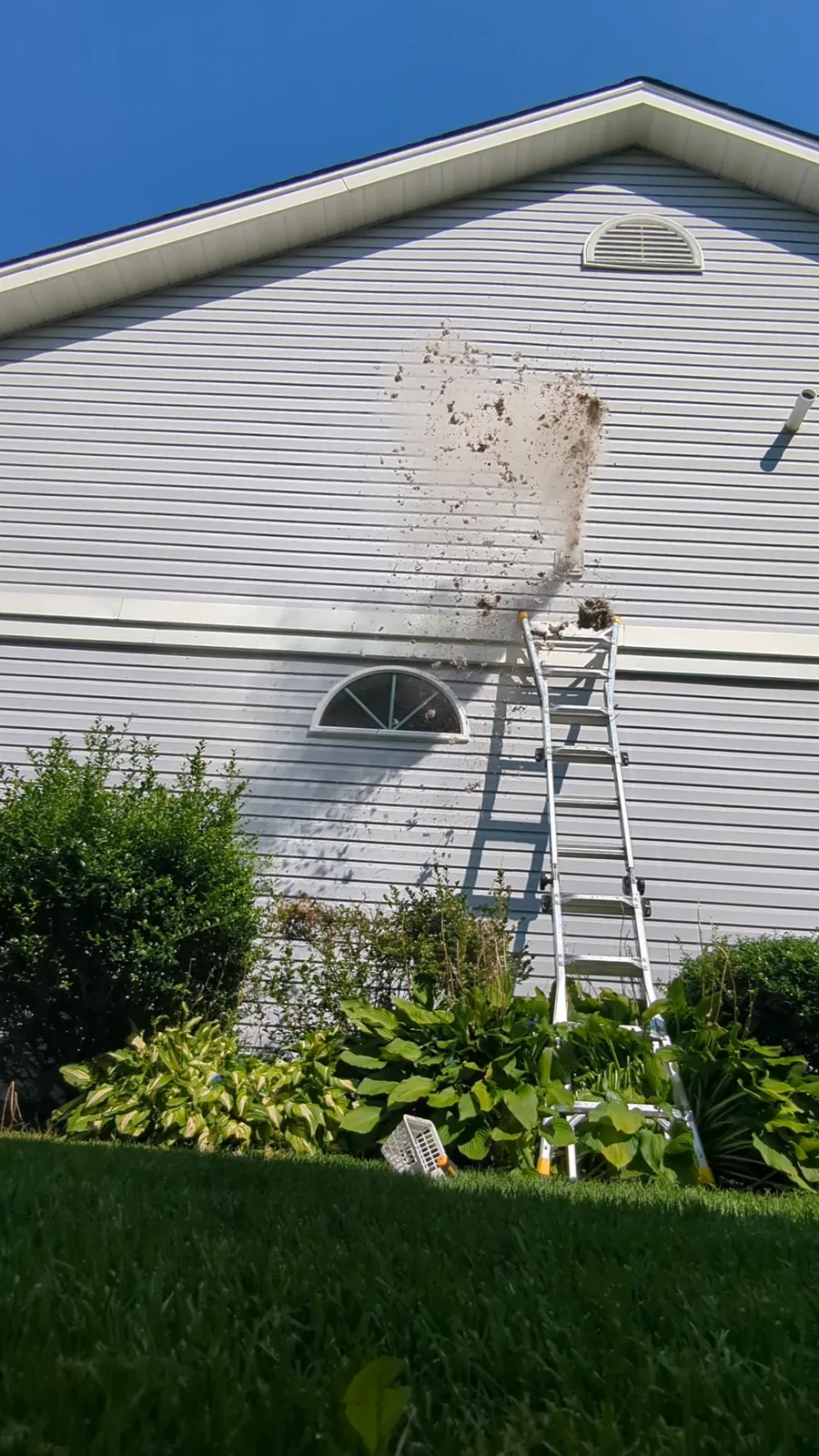
We cleaned it from both ends. Outside, we worked from a ladder at the hood, and a cloud of lint came out of the vent. That cloud in the photo is lint, and it had been sitting in the path of hot air every time the dryer ran.
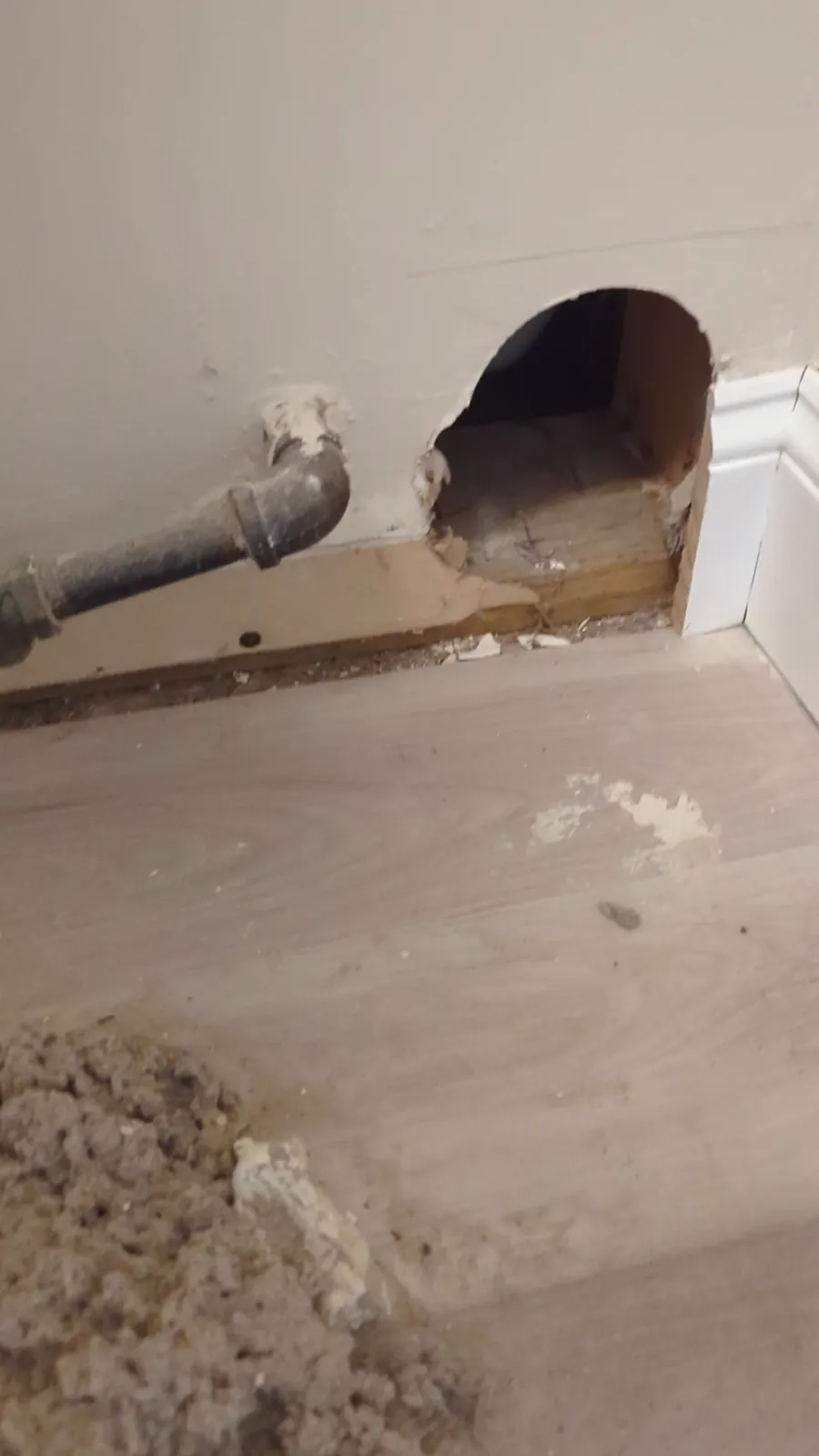
Then we did the inside, at the duct opening behind the dryer. What came out of that end sat in a pile on the floor. That's from one dryer in one house, all that lint sitting between the drum and the outside air.
The customer got time-stamped before and after photos and a written report, the same as every job we do. Between those and the video, you don't have to take our word for what was in there.
Signs your dryer vent is blocked
You don't need a camera to know something's wrong. Your dryer tells you.
- Clothes take two cycles to dry. Air isn't getting out, so water isn't either.
- Both the dryer and the laundry room get hot while it runs. Heat that should be leaving the house is staying in the room.
- Lint around the outside hood. If it's collecting on the wall, the hood isn't clearing.
- A burning smell. Stop using the dryer and get the vent checked before the next load.
Run the dryer and go outside and look at the hood while it's going. If lint has built up around it, or you can't tell because the vent is high up on the wall, that's a call.
How often, and what it costs
Once a year is right for most homes, more than that if the run is long or the dryer goes every day. Dryer vent cleaning starts at $150.
On the Quarterly Maintenance Plan, the dryer vent is a winter-visit item. The HVAC filter gets done on that visit too, and so do the smoke and CO alarm batteries and the bathroom exhaust vents. While we're there, we also take care of the range hood and dishwasher filters and the refrigerator coils, so the small things that get skipped the rest of the year get handled in one visit.
The lesson from this one
You don't know what you don't know until someone's looking. From the laundry room, you can't see inside a dryer duct at all, and a hood that sits high up on the wall is just as hard to see into. That's why the camera went in first.
Ask us about our Quarterly Maintenance Plan so your property gets maintained and documented by professionals who don't take shortcuts. If you're in Toms River or anywhere within about an hour of Pine Beach, call us at (732) 362-4425 or request a quote. We're licensed, bonded, and insured.