Commercial · Seaside Park, NJ · · By Nick Sheridan
A tenant at White Sands in Seaside Park, NJ decided to dump their planter pots out the window, and the soil landed on the siding and on the AC condensing units below. We run the maintenance there for Pinnacle Property Management, and we're out 17 times a year, twice in some months and once in others.
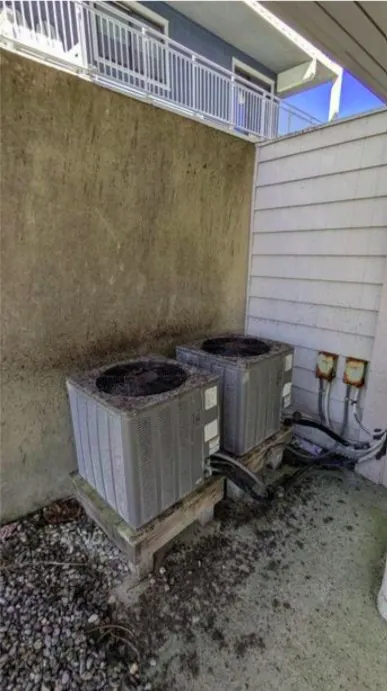
What dirt does to a condensing unit
The condensing unit is the outdoor half of an air conditioning system. Its whole job is getting rid of heat. Inside the building, the refrigerant picks heat up, then it runs through a coil out in the unit, and a fan pulls outside air across those thin metal fins to carry the heat away.
Those fins need to be clean and open, and soil packed into them blocks the air. The coil can't shed heat, so the pressure inside the system climbs and the compressor runs hotter and longer to do the same job. The electric bill goes up first. Then the compressor starts to wear, and that's the expensive part. Once it fails on an older unit, the usual answer is to replace the whole condensing unit.
Wet soil also holds water against the fins and the base of the unit, which corrodes the metal. Potting soil carries fertilizer salts on top of that, and those speed the corrosion up.
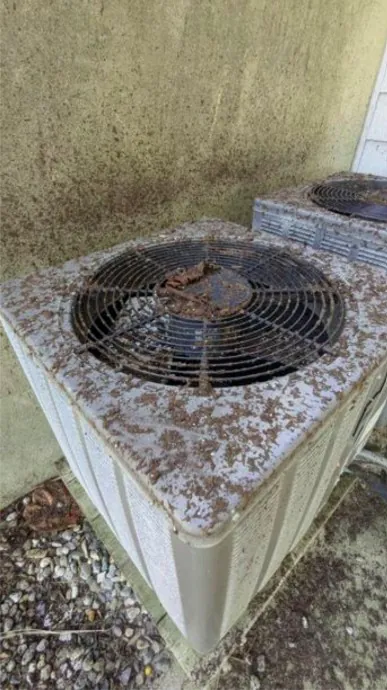
What we did
We caught the issue early and were able to clean out the AC units before any costly repairs were needed. Once the soil was out, the units were pulling clean air again.
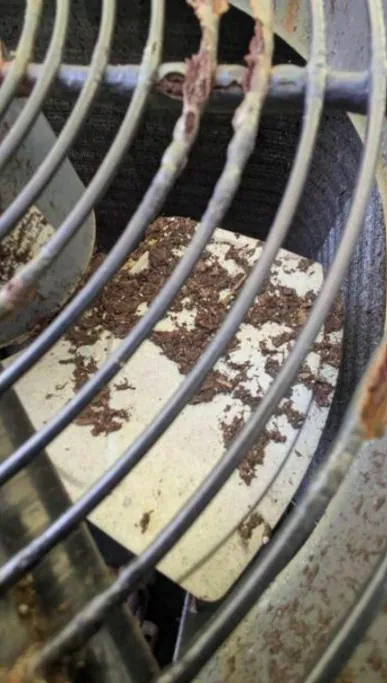
Proactive cleaning and maintenance like this could potentially have saved over $20,000 in replacing the condensing units. That's our estimate of what the replacements would've cost, and it's the kind of number no property manager wants on a capital budget because of a planter pot.
What a property manager can check
A first look doesn't take an HVAC technician. Walk the mechanical areas on a regular schedule, and again after any storm or tenant turnover.
- Look at the fins on each condensing unit. They should be straight, and you should be able to see light through them. Packed dirt or grass clippings mean the unit is working harder than it should.
- Look at the top of the unit and the ground around it. Anything that fell from above will be sitting there.
- Keep plantings and stored items well clear of the units so air can move on every side.
- Listen. A unit that runs without stopping on a mild day is a unit that can't shed heat.
- Look at the siding above the units for anything that's been thrown or dumped from a window or a balcony.
If you find a unit packed with debris, shut it off at the disconnect and have it cleaned before you run it again.
How the plan covers this
At White Sands, we handle the common-area, exterior, and safety upkeep for Pinnacle Property Management. That's 17 visits a year, every one with before and after photos. Being on site that often is why something like this gets found and dealt with instead of sitting through a summer. On our standard Commercial Quarterly Maintenance Plan, AC coil cleaning is a third-quarter item, and the facade and the entryways get covered by the exterior wash in the second quarter.
Those before and after photos are time-stamped and come with a report, so the manager sees what we found and what we left, and when, without having to drive out.
One tip for other customers
Here at Sterling Properties, we treat your property like our own. If something looks off, we deal with it on the spot, and we document it, and to us that's worth more than any single service on the checklist.
If you manage a building in Seaside Park or anywhere in Ocean or Monmouth County and nobody's looking at your condensing units between service calls, call (732) 362-4425 or request a quote. We're licensed, bonded, and insured, NJHIC #13VH13963600.