Commercial · Ocean County, NJ · · By Nick Sheridan
Most of what goes wrong on an HOA property in Ocean County goes wrong where nobody on the HOA board walks. Up on the flat roof. Behind the fence where the condensing units sit. Here's the list we work from on a commercial visit, written so an HOA board member or a property manager can walk the building with it.
It's the list the commercial Quarterly Maintenance Plan runs on, four visits a year with a photo report after each one. Walk it yourself in spring and fall, or hand it to us. Either way, somebody's looking.
Building exterior
Start at the street and look at the building the way a buyer would.
- Siding, stucco and painted trim. Green on the shaded side or a gray film of salt means it's due for a soft wash, low pressure only.
- Facade and entryways. They get washed every spring on the plan, so hold them up against last spring's photos.
- Fences and entry signs. Algae and rust streaks come off, and so does graffiti.
- Windows, inside and out. Out on the barrier island the salt film is back on the glass a week after a windy day.
- Siding under every window and balcony. Whatever a tenant tosses out hits the siding first, then whatever's below.
Walkways and parking areas
Concrete can take the pressure, so this is the part of the property that cleans up fastest.
- Sidewalks, walkways and patios. Gray or green concrete gets the surface cleaner, the round attachment that leaves even passes and no stripes. That's commercial pressure washing, a spring item.
- Rust stains and graffiti, on concrete or on walls. Both come off.
- Dumpster pad and trash enclosure. Cleaned and disinfected, a summer item.
- Parking lot. Swept, not washed.
Gutters and roof drains
From the parking lot, a clogged gutter and a clean one look the same. The clog is usually down in the downspout at the first elbow, which is why our gutter cleaning always ends with a flush.
- Every downspout flushed from the top until the water runs clear at the bottom. Nothing coming through means the clog gets worked out by hand.
- Extensions and splash blocks still carrying water away from the foundation. One that's been kicked sideways dumps it on the walk.
- Flat roofs. Roof drains and scuppers cleared, because a blocked drain leaves water standing up there, and standing water ends up at a seam.
- Fascia behind each gutter. Dark stains or peeling paint means water's been going over the back edge.
- A gutter pulling away from the fascia or a dripping seam. It gets photographed for the report, and the repair gets quoted before anyone touches it.
Dryer vents in multi-unit buildings
The tenant won't flag this one. A dryer that runs hot gets blamed on the dryer while the lint packs in behind the wall. For an HOA board or a landlord, dryer vent cleaning is a fire safety item first.
- Every unit's vent, the whole run. From the hose behind the dryer out to the hood on the wall, at least once a year.
- Outside hoods. The flap should swing open with the dryer running, and the wall around it should be clean of lint.
- Long runs with bends, like a vent that drops through a lower level to get outside. Lint collects at each bend, so those get done more often.
- Foil or plastic hoses behind the dryer. They sag, hold lint and aren't rated for the heat. The fix is an elbow that fits, sealed with heat rated tape.
- Anything holding a duct joint together that was never meant to. We pulled binder clips out of one in Wall Township.
The vents ride on the winter visit, the same day we test the emergency lights and swap the smoke and CO alarm batteries, so the fire safety work gets done in one trip. The bathroom exhaust vents get cleaned while we're in there.
Mechanical: water heaters and AC coils
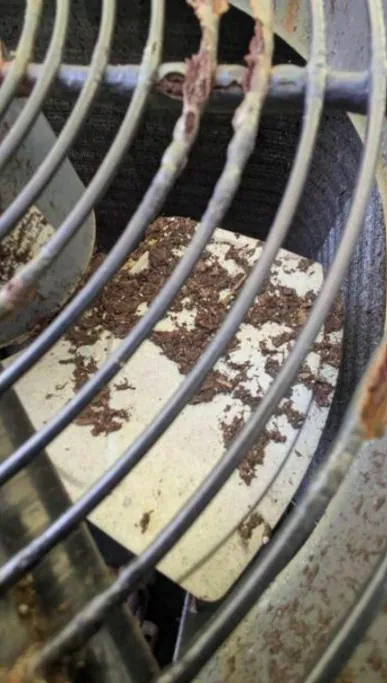
Nobody walks past the condensing units on purpose. That's how potting soil ends up sitting in one until somebody looks.
- Fins on each unit. Straight, silver, and you can see light through them. Gray or green fins, or fins packed with dirt, mean the unit's running harder than it needs to.
- Top of each unit and the ground around it. Whatever came down from above is still there. At the White Sands in Seaside Park it was a tenant's planter pots, and that post has the photos.
- Plantings and stored items pulled back from the units. The fan needs air from every side.
- A unit that won't shut off on a mild day. It can't shed heat. Kill it at the disconnect and don't run it again until the coil's been cleaned.
- Water heaters. Popping or rumbling, hot water that doesn't last like it did, or hot water that comes out cloudy. That's sediment sitting on the bottom of the tank, and a water heater flush is how it comes out.
The paperwork: photo report and one invoice
An HOA board has to prove the work happened, usually to people who weren't there. The treasurer wants one invoice to file, and the rest of the HOA board wants to see the work without driving over.
- Before and after photos of every item, time-stamped, down to the water running out of each downspout.
- A short written report after every visit, with anything the crew saw that wasn't on the list and what we'd do about it.
- One invoice per visit, whether the work comes through the management company or straight to the HOA board.
- One contact. The team is Nick plus a field operations manager, so you're talking to one of the two people who did the work.
- A certificate of insurance with the proposal if you ask for one. It covers general liability and workers' compensation, and the license is NJHIC #13VH13963600.
- Anything that isn't on the plan gets a price first, and you decide.
How often
Everything above fits in four visits a year, one a season, and the visit by visit version is in the four visits an HOA board gets from one vendor. Short version: fire safety and the indoor items in winter, the building's outside and the first gutter round in spring, windows and coils in summer, gutters and drains again in fall.
Some properties need more than four. At the White Sands in Seaside Park we're there 17 times a year for Pinnacle Property Management, some months twice. That schedule is what put us in front of those condensing units after the planter pots came down. Nobody called. The units got cleaned out before anything needed replacing, and new condensers could potentially have run over $20,000.
Walk the property twice a year with this list and a pen. What the list can't cover is the months in between. That's what a schedule is for. If you sit on an HOA board or manage a building in Ocean or Monmouth County, the number is (732) 362-4425, or send the address through the quote form. We'll come out, walk the building with you and write this list for that property.